








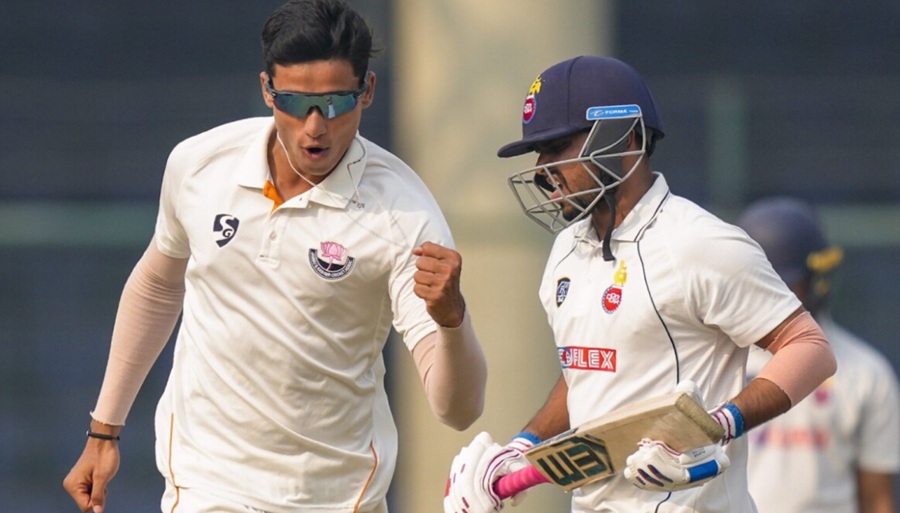
Introduction: Delhi Cricket Team vs Jammu and Kashmir Cricket Team Match Scorecard
The Ranji Trophy has always been the stage where Indian domestic cricket reveals its toughest competitors, future internationals, and most dramatic red-ball contests. Some matches pass quietly through the calendar. Others reshape narratives. The clash between the Delhi cricket team and the Jammu & Kashmir cricket team during the 2025–26 Ranji Trophy season belonged firmly in the second category.
Played at the Arun Jaitley Stadium in Delhi, the fixture carried significance beyond the points table. Delhi entered the game as favorites based on history, squad depth, and experience. Jammu & Kashmir arrived with confidence, sharper preparation, and one of the most disciplined pace attacks in the tournament.
Over four days, the visitors outplayed Delhi in almost every critical phase.
They bowled with control. They handled pressure better. They capitalized on key sessions. Most importantly, they avoided the collapses that hurt Delhi repeatedly throughout the match.
When the final runs were scored, Jammu & Kashmir had secured a historic seven-wicket victory — their first-ever Ranji Trophy win against Delhi. It was not a lucky result. It was earned through sustained discipline and tactical clarity.
Table of Contents
Match Details
| Match | Delhi vs Jammu & Kashmir |
|---|---|
| Tournament | Ranji Trophy 2025–26 |
| Venue | Arun Jaitley Stadium, Delhi |
| Match Type | First-Class |
| Dates | 8–11 November 2025 |
| Toss | Jammu & Kashmir won toss, elected to field |
| Result | Jammu & Kashmir won by 7 wickets |
| Player of the Match | Auqib Nabi |
The pitch looked dry on the surface before the start, but there was enough early moisture underneath to assist seam movement during the opening day. Jammu & Kashmir recognized that immediately after winning the toss.
Delhi never fully recovered.
Match Timeline
Day 1 – Jammu & Kashmir Take Immediate Control
Delhi’s innings began cautiously. Too cautiously, perhaps.
The opening overs belonged entirely to the visitors. Auqib Nabi bowled with a full seam position, attacked the stumps, and forced Delhi’s batters to play constantly.
Arpit Rana fell without scoring. Yash Dhull followed soon after. Suddenly, Delhi were under pressure before lunch.
Ayush Badoni tried to change the tempo. He used his feet well against spin and looked comfortable driving on the rise. For a brief period, Delhi appeared capable of rebuilding.
But Jammu & Kashmir stayed patient.
Every time Delhi stitched together a partnership, another wicket arrived.
By late evening, Delhi were dismissed for 211. Considering the batting conditions later in the game, it already looked below par.
Day 2 – Jammu & Kashmir Build the Platform
This was the day that shaped the result.
Qamran Iqbal and Vivrant Sharma negotiated the new ball intelligently. They left deliveries outside off stump, forced Delhi’s bowlers straighter, and slowly shifted momentum.
Delhi’s seamers created occasional opportunities, but they could not maintain pressure for long stretches.
Once Paras Dogra settled in, Jammu & Kashmir controlled the middle session completely.
The turning point came during the partnership between Dogra and Abdul Samad. Delhi spread the field too early, allowing easy singles. The scoring rate rose without significant risk.
By stumps, Jammu & Kashmir had crossed Delhi’s total and established firm scoreboard control.
Day 3 – Delhi Respond Through Badoni
Delhi fought harder in the second innings.
Ayush Badoni again led the resistance. This time, he played with greater balance between attack and defense. He punished anything short and rotated strike effectively against spin.
Ayush Doseja supported him well. Their partnership gave Delhi hope.
For a few hours, the game became competitive again.
But Jammu & Kashmir’s bowlers never lost discipline. Auqib Nabi returned with the second new ball and immediately tightened the scoring rate.
Delhi added useful runs, though not enough to place the visitors under major fourth-innings pressure.
When the innings ended at 277, Jammu & Kashmir needed 179 to win.
On a deteriorating surface, that target was still meaningful. But Delhi required early wickets.
They never got enough.
Day 4 – A Controlled Chase
There was no panic from Jammu & Kashmir.
Qamran Iqbal batted with impressive calm. He left well, absorbed pressure, and punished loose deliveries square of the wicket.
Delhi searched for breakthroughs. They rotated bowlers frequently. Hrithik Shokeen found some turn, but the visitors rarely allowed scoreboard pressure to build.
Vivrant Sharma played positively before Abdul Samad finished the chase with authority.
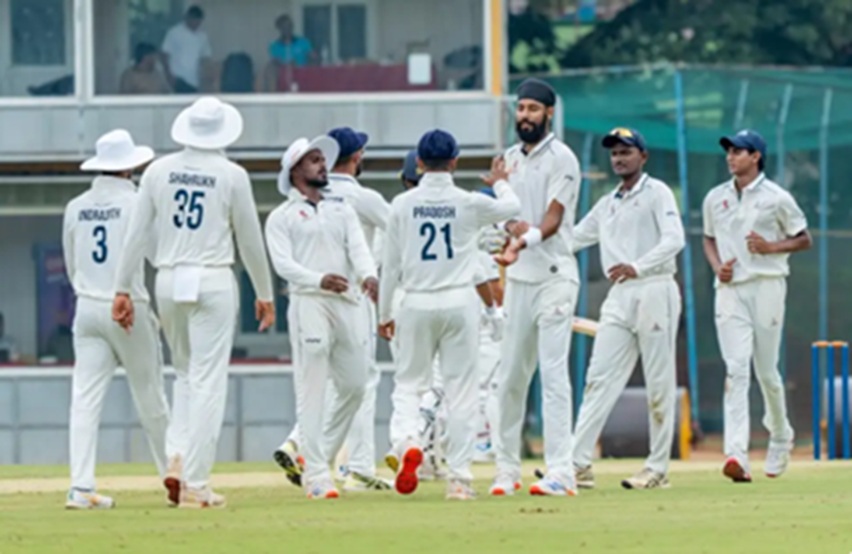
The celebrations afterward reflected the scale of the achievement.
For Jammu & Kashmir cricket, this was a landmark victory.
Full Match Scorecard
Delhi First Innings – 211 All Out
| Batter | Runs | Balls | 4s | 6s |
|---|---|---|---|---|
| Arpit Rana | 0 | 15 | 0 | 0 |
| Sanat Sangwan | 12 | 32 | 1 | 0 |
| Yash Dhull | 1 | 3 | 0 | 0 |
| Ayush Badoni | 64 | 82 | 6 | 0 |
| Ayush Doseja | 65 | 143 | 6 | 1 |
| Sumit Mathur | 55* | 115 | 8 | 1 |
| Anuj Rawat | 0 | 6 | 0 | 0 |
| Hrithik Shokeen | 7 | 5 | 0 | 1 |
| Simarjeet Singh | 0 | 11 | 0 | 0 |
| Money Grewal | 0 | 1 | 0 | 0 |
Total
211 all out in 69 overs.
Jammu & Kashmir Bowling – First Innings
| Bowler | Overs | Maidens | Runs | Wickets |
|---|---|---|---|---|
| Auqib Nabi | 18 | 5 | 37 | 5 |
| Abid Mushtaq | 17 | 3 | 52 | 2 |
| Vanshaj Sharma | 16 | 2 | 48 | 2 |
| Sunil Kumar | 12 | 1 | 41 | 1 |
Auqib Nabi’s spell was relentless. Not express pace. Not extravagant swing. Just disciplined first-class bowling.
He attacked the same corridor repeatedly and forced mistakes.
Jammu & Kashmir First Innings – 310 All Out
| Batter | Runs | Balls |
|---|---|---|
| Qamran Iqbal | 78 | 145 |
| Vivrant Sharma | 42 | 68 |
| Paras Dogra | 66 | 119 |
| Abdul Samad | 49 | 61 |
| Kanhaiya Wadhawan | 31 | 57 |
Total
310 all out.
Lead
99 runs.
That first-innings lead changed the psychology of the match.
Delhi were chasing the game from that point onward.
Delhi Bowling – First Innings
| Bowler | Overs | Runs | Wickets |
|---|---|---|---|
| Simarjeet Singh | 21 | 74 | 3 |
| Hrithik Shokeen | 28 | 83 | 2 |
| Money Grewal | 17 | 61 | 2 |
Delhi’s attack lacked sustained control during middle sessions. Too many boundary balls relieved pressure.
Delhi Second Innings – 277 All Out
| Batter | Runs | Balls |
|---|---|---|
| Ayush Badoni | 72 | 96 |
| Ayush Doseja | 58 | 121 |
| Yash Dhull | 41 | 73 |
| Sumit Mathur | 36 | 88 |
Total
277 all out.
Target for Jammu & Kashmir: 179.
Jammu & Kashmir Bowling – Second Innings
| Bowler | Overs | Runs | Wickets |
|---|---|---|---|
| Auqib Nabi | 19 | 61 | 4 |
| Abid Mushtaq | 24 | 71 | 3 |
| Sunil Kumar | 18 | 55 | 2 |
Even when Delhi counterattacked, the visitors stayed organized. No loose overs. No panic.
That consistency made the difference.
Jammu & Kashmir Second Innings – 179/3
| Batter | Runs |
|---|---|
| Qamran Iqbal | 68 |
| Vivrant Sharma | 39 |
| Abdul Samad | 44* |
Result
Jammu & Kashmir won by seven wickets.
The chase was measured rather than explosive. They treated it like an extended first-class partnership exercise — and executed it superbly.
Head-to-Head Record
Delhi vs Jammu & Kashmir in Ranji Trophy
| Category | Delhi | Jammu & Kashmir |
|---|---|---|
| Matches | 10 | 10 |
| Wins | 7 | 1 |
| Draws | 2 | 2 |
| Highest Team Score | 430 | 390 |
| Lowest Team Score | 137 | 112 |
For years, Delhi dominated this fixture. That history made the 2025 result even more significant.
Batting Analysis
Ayush Badoni – Delhi’s Lone Constant
Badoni was Delhi’s best batter by distance.
| Innings | Runs |
|---|---|
| First Innings | 64 |
| Second Innings | 72 |
He handled pressure situations twice in the same match. His footwork against spin stood out, especially on a slowing surface.
Without Badoni, Delhi’s defeat margin could have been considerably heavier.
Qamran Iqbal’s Match Control
Some innings are remembered for strokeplay. Others for control.
Qamran Iqbal’s batting belonged to the second category.
Match Aggregate
146 runs.
He absorbed pressure during both innings and denied Delhi any extended opening with the ball.
His judgment outside off stump was excellent throughout the game.
Bowling Analysis
Auqib Nabi’s Match-Winning Spell
| Statistic | Value |
|---|---|
| Match Wickets | 9 |
| Best Figures | 5/37 |
| Economy Rate | Under 3 |
Nabi’s lengths rarely changed. That was the key.
He bowled:
- Full without overpitching
- Straight without drifting leg side
- Tight channels outside off stump
Delhi’s batters kept getting drawn into uncertain strokes.
It was high-quality red-ball bowling.
Tactical Analysis
Why Jammu & Kashmir Won
Better New-Ball Execution
Their seamers understood the surface earlier than Delhi did.
The visitors attacked fuller lengths immediately, while Delhi occasionally bowled too short.
That small tactical difference produced a major scoring gap.
Smarter Field Placements
Jammu & Kashmir stayed aggressive:
- Three slips early
- Catching cover
- Short leg against spin
Delhi often moved fielders back too quickly.
Better Session Management
This is where the match was truly decided.
Jammu & Kashmir consistently won:
- Opening hours
- Post-lunch periods
- Lower-order phases
In four-day cricket, dominance rarely comes from one explosive passage. It comes from repeatedly controlling small sessions.
The visitors did that better.
Memorable Moments
Auqib Nabi’s First-Innings Burst
Delhi appeared to be rebuilding before Nabi returned and dismantled the lower order rapidly.
That spell effectively prevented Delhi from reaching a competitive first-innings score.
Abdul Samad’s Calm Finish
Samad resisted the temptation to attack recklessly during the chase.
He chose percentages over flair. It was mature batting.
Historic Celebration
Once the winning runs were scored, the emotion from Jammu & Kashmir players was immediate.
This was not just another league-stage win.
It was history.
Group Standings Impact
| Team | Points |
|---|---|
| Mumbai | 19 |
| Jammu & Kashmir | 17 |
| Delhi | 9 |
The result pushed Jammu & Kashmir closer to knockout qualification while leaving Delhi under significant pressure in the standings.
Key Match Statistics
| Category | Record |
|---|---|
| Highest Score | Qamran Iqbal – 78 |
| Best Bowling | Auqib Nabi – 5/37 |
| Most Runs | Qamran Iqbal – 146 |
| Most Wickets | Auqib Nabi – 9 |
| Biggest Partnership | 88 |
Latest Developments
The result had broader implications across Indian domestic cricket.
Following the match:
- Auqib Nabi attracted IPL scouting attention
- Jammu & Kashmir gained momentum in the Ranji season
- Delhi’s batting depth came under scrutiny
- Abdul Samad strengthened his reputation in red-ball cricket
The victory is now widely viewed as one of the defining domestic results of the season.
FAQs: Delhi Cricket Team vs Jammu and Kashmir Cricket Team Match Scorecard
Who won the Delhi vs Jammu & Kashmir match?
Jammu & Kashmir won by seven wickets.
Who was Player of the Match?
Auqib Nabi received the award for his nine wickets in the match.
What was the turning point?
Delhi’s collapse in the first innings after early wickets gave Jammu & Kashmir control of the match.
Which batter scored the most runs?
Qamran Iqbal finished with the highest aggregate in the match.
Why was this match historic?
It marked Jammu & Kashmir’s first-ever Ranji Trophy victory against Delhi.
Conclusion: Delhi Cricket Team vs Jammu and Kashmir Cricket Team Match Scorecard
The Delhi cricket team vs Jammu and Kashmir cricket team match scorecard tells the story of a side that executed basic first-class cricket disciplines more effectively across four days.
Jammu & Kashmir bowled fuller. They held catches. They built partnerships. They controlled sessions patiently.
Delhi showed flashes of resistance through Ayush Badoni and Ayush Doseja, but repeated top-order failures and inconsistent bowling pressure proved costly.
What stood out most was Jammu & Kashmir’s composure. They never appeared overwhelmed by the occasion or the venue. Their approach remained methodical from the opening morning through the final chase.
In many ways, this result reflected the changing structure of Indian domestic cricket. Traditional reputations no longer guarantee control. Teams with stronger planning, disciplined execution, and emerging fast-bowling depth can challenge anybody.
Also Read About:-) Uttar Pradesh cricket team vs Kerala cricket team match scorecard: Full Report